
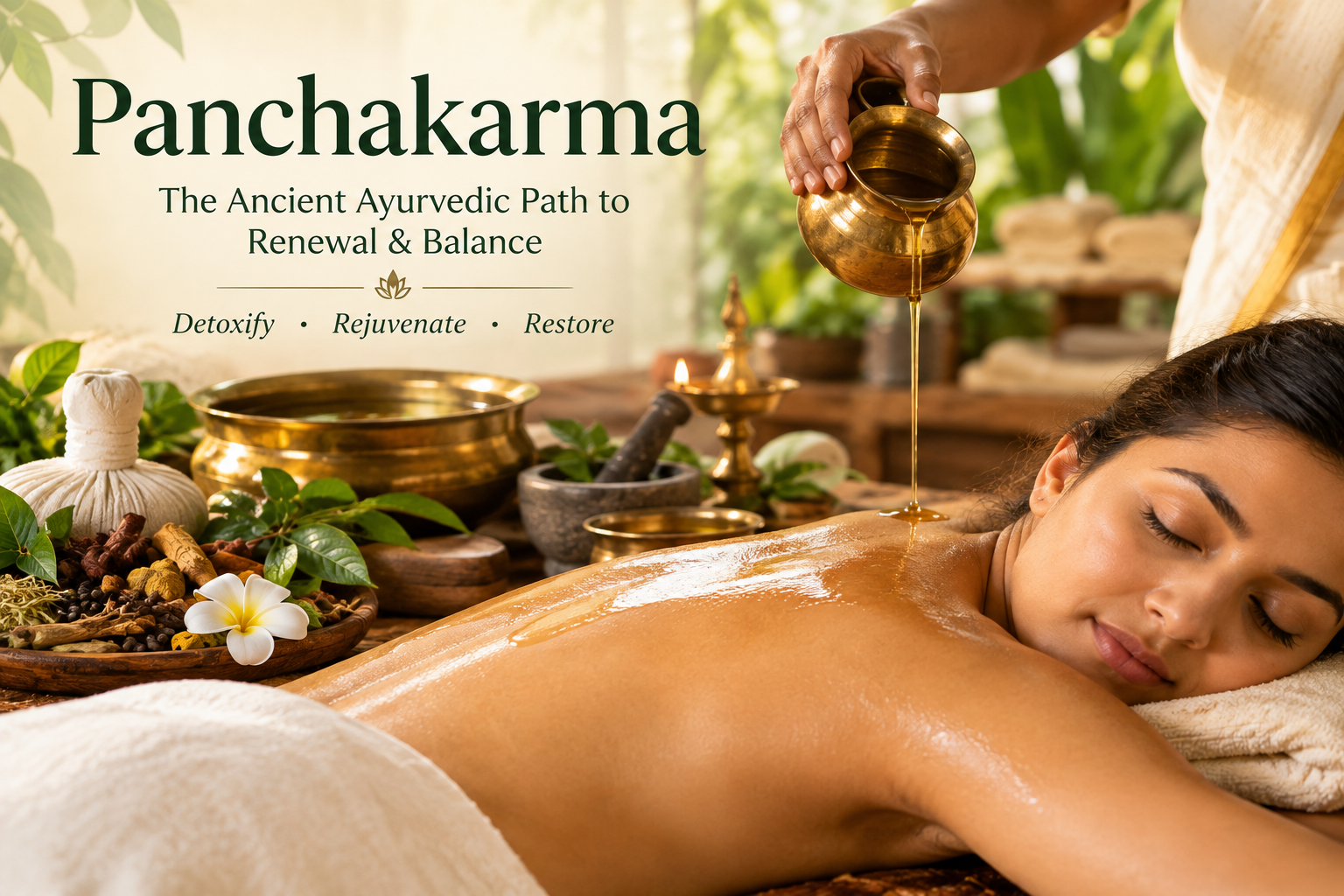
Why Is Fall Considered an Important Time for Panchakarma?
Fall is more than a change in weather. In Ayurveda, it is a natural time to slow down, reset, and cleanse the body.
As summer comes to an end and the weather becomes cooler, drier, and more unpredictable, our bodies also begin to adjust. You may notice changes in digestion, bowel movements, sleep, energy, skin, or stress levels.
According to Ayurveda, fall is primarily associated with Vata dosha—the qualities of dryness, lightness, movement, and change. When these qualities increase, Vata can become aggravated, especially when daily routines, diet, sleep, and stress are not balanced.
This is one reason fall is traditionally considered an important season for Ayurvedic cleansing and Panchakarma.
Why Do Panchakarma in Fall?
Panchakarma is a traditional Ayurvedic cleansing and rejuvenation process designed to help the body eliminate accumulated waste and restore balance.
Unlike a quick detox or restrictive cleanse, Ayurvedic Panchakarma is personalized to the individual. The process considers your constitution, current imbalance, digestion, lifestyle, and overall condition before determining which therapies are appropriate.
Fall can be an ideal time to consider Panchakarma because it provides an opportunity to:
Reset your digestion after summer
Establish a more regular daily routine
Support healthy elimination
Address feelings of heaviness or sluggishness
Calm excess Vata
Prepare the body for the colder months
Support relaxation and better self-care
Reconnect with healthier eating and lifestyle habits
The goal is not simply to “detox” for a few days. It is to create a deeper seasonal reset.
What Happens to the Body in Fall According to Ayurveda?
Ayurveda views every season as having its own qualities.
Summer tends to be hot and intense, while fall brings cooler temperatures, dryness, wind, irregularity, and change. These qualities can increase Vata dosha.
When Vata becomes excessive, some people may experience:
Irregular digestion
Gas or bloating
Constipation
Dry skin
Restlessness
Difficulty relaxing
Disturbed sleep
Variable appetite
Feeling scattered or depleted
These symptoms can have many possible causes, so they should not automatically be attributed to Vata. An Ayurvedic practitioner looks at the complete picture before recommending a cleansing program.
Fall Is a Natural Time to Reset
Think about the transition from summer into fall.
Longer days, travel, social events, outdoor activities, irregular meals, cold foods and drinks, and changes in sleep schedules can leave your routine disrupted.
Fall gives you a natural opportunity to return to structure.
Warm, nourishing foods. Regular meals. Earlier nights. Gentle movement. More rest.
And, when appropriate, Ayurvedic Panchakarma can become part of that seasonal reset.
What Is Panchakarma?
Panchakarma is a classical Ayurvedic system of cleansing therapies. The word refers to five therapeutic actions traditionally used to support the elimination of accumulated waste and restore balance.
A Panchakarma program may incorporate therapies such as:
Abhyanga – Ayurvedic oil massage used as part of the preparatory process and to promote relaxation.
Swedana – Herbal steam therapy traditionally used following oil therapy to support the body's cleansing process.
Shirodhara – A continuous flow of warm herbal oil over the forehead, traditionally used to encourage deep relaxation.
Nasya – A traditional Ayurvedic therapy involving herbal oil or preparations administered through the nasal passages.
Basti – A classical Ayurvedic therapy involving the administration of herbal preparations through the rectal route, traditionally associated with Vata management.
Virechana – A supervised Ayurvedic purgation therapy used for appropriate individuals as part of a cleansing protocol.
Not everyone needs every therapy. Panchakarma should be customized rather than treated as a standard package.
Fall Panchakarma Is Not a Quick Detox
There is an important difference between a short “detox” and a properly planned Ayurvedic Panchakarma program.
Panchakarma involves preparation, specific therapies, diet, rest, and a gradual transition afterward.
At ZenVeda, we begin with an Ayurvedic consultation to understand your Prakriti (constitution), Vikriti (current imbalance), digestion, lifestyle, and individual goals.
Only after this assessment can the appropriate Panchakarma approach be determined.
How Long Does Fall Panchakarma Take?
Panchakarma should not be rushed.
A personalized program generally requires at least two weeks, although the exact duration depends on the individual and the therapies recommended.
The process may include:
Preparation → Ayurvedic therapies → Cleansing → Rest and recovery → Rejuvenation
This structured approach allows the body to gradually move through the cleansing process rather than undergoing an aggressive short-term detox.
Who May Consider Panchakarma in Fall?
People often consider fall Panchakarma when they feel that their body needs a deeper reset after summer or when seasonal changes affect their digestion, energy, sleep, or routine.
You may want to explore an Ayurvedic consultation if you are experiencing:
Digestive sluggishness
Bloating or irregular elimination
Stress and mental fatigue
Poor sleep
Feeling heavy or depleted
An inconsistent lifestyle
Difficulty maintaining healthy routines
A desire for seasonal cleansing and rejuvenation
However, Panchakarma is not appropriate for everyone. Certain health conditions, medications, pregnancy, age, strength, and other factors may affect whether particular cleansing therapies are suitable.
Why Choose ZenVeda for Panchakarma in NYC?
At ZenVeda NY, Panchakarma begins with understanding the individual—not simply selecting a detox package.
Vaidhya Reetu Rudra is an Ayurvedic Doctor and Panchakarma Specialist with more than 22 years of Ayurvedic clinical experience.
Each Panchakarma program is designed around the individual's constitution, current condition, digestion, lifestyle, and wellness goals.
Located in Manhattan, ZenVeda provides personalized Ayurvedic Panchakarma in NYC for individuals looking for a structured approach to seasonal cleansing, balance, and rejuvenation.
Make Fall Your Season to Reset
You don't have to wait until your body feels completely depleted to start paying attention to it.
Fall is a natural reminder to slow down, simplify your routine, nourish your digestion, and create space for renewal.
If you have been feeling sluggish, stressed, irregular, or simply not quite yourself after the summer, fall may be the right time to explore what your body needs.
A personalized Ayurvedic consultation can help determine whether Panchakarma or another Ayurvedic approach is appropriate for you.
Listen to your body. Understand what it needs. Then begin your reset.
Panchakarma is a traditional Ayurvedic system and is not intended to diagnose, treat, cure, or prevent disease. Individual recommendations vary. Consult an appropriate healthcare professional regarding medical conditions and medications.